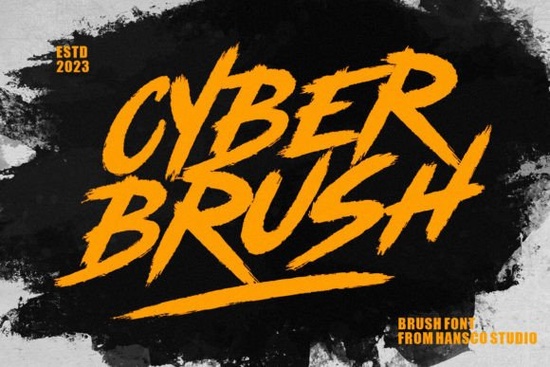
If you're looking for a bold, hand-drawn font that stands out on shirts, posters, or social media graphics without looking overly polished or generic you’ll likely appreciate Cyber Brush Font. It’s a dry-brush handwritten typeface with visible texture, rough edges, and confident strokes. Unlike smooth script fonts, Cyber Brush feels tactile and human-made, making it especially useful when you want energy and authenticity not perfection.
What makes Cyber Brush different from other brush fonts?
Most brush-style fonts mimic ink flow or calligraphy pens. Cyber Brush goes further: it captures the grit and grain of actual dry brush work think chalk on concrete or marker on kraft paper. The texture isn’t just an overlay; it’s built into each glyph. That means letters hold up well at large sizes (like on a poster or t-shirt front) and still read clearly when scaled down to 24pt for a product label or Instagram story.
It includes full uppercase letters, numerals, punctuation, and extended Latin characters so it supports common European languages like Spanish, French, and German without missing accents or symbols. You won’t need to swap fonts mid-sentence to get an é or ñ.
Where does Cyber Brush work best?
This font shines where contrast and character matter:
- Logos and branding for indie shops, streetwear labels, or creative studios wanting a raw, confident identity
- Printable templates think quote cards, planner stickers, or workshop handouts where texture adds warmth
- Apparel designs, especially on dark fabric or distressed backgrounds, since its dry-brush look blends naturally with grunge or retro aesthetics
- Text overlays on photos, because the irregular edges help letters “sit into” busy backgrounds instead of floating awkwardly on top
It’s not ideal for body text or long paragraphs it’s designed to grab attention, not guide the eye through dense copy. But for headlines, quotes, shop names, or short slogans? It delivers clarity and personality.
How does it compare to other popular script fonts?
Cyber Brush sits in a specific niche: bold, handmade, slightly imperfect. If you’ve used Font Maker Font, you’ll notice Cyber Brush has more aggressive texture and less uniform spacing great if you want attitude over elegance. It’s bolder than Southmore Font, which leans cleaner and more versatile for mixed-use projects. Compared to Gorgeous Teacher Font, Cyber Brush trades playful roundness for sharp, angular energy better for urban or tech-adjacent themes.
It’s also distinct from high-contrast options like Fidelity Contrasts Font, which uses dramatic thick-thin transitions. Cyber Brush keeps weight consistent but varies texture so it holds up better on low-resolution print or embroidery previews. And unlike delicate wedding scripts such as Elegant Wedding Font, Cyber Brush doesn’t rely on fine hairlines or flourishes. That makes it more durable across production methods from vinyl cutting to screen printing.
Practical tips before downloading
• Test it at real-world sizes first try 60pt on a mock t-shirt and 14pt on a business card preview. Dry-brush fonts can lose legibility fast if too small.
• Pair it with a clean sans-serif (like Montserrat or Inter) for balance never with another textured or script font unless you’re intentionally going chaotic.
• Check your design software supports OpenType features. Cyber Brush includes standard ligatures and alternate characters, but only some apps (like Illustrator or Affinity Designer) show them by default.
• If you’re using it for POD, confirm the file format included (OTF and TTF are both usually provided) and test upload with your platform some limit font embedding or require specific naming conventions.
One last note: while Cyber Brush works well across many contexts, it’s not meant to replace all your script fonts. Think of it as your go-to for moments when you need immediacy, edge, and visual weight not refinement.
Before you use Cyber Brush Font in your next project, try this quick checklist:
- Is the message short and impactful? (Ideal length: 1–5 words)
- Will it appear on a surface or background that complements rough texture like denim, concrete, or grainy photo overlays?
- Are you pairing it with a neutral, highly legible secondary font?
- Have you tested how it renders at your final output size not just in your design app preview?
- Does your intended use align with Creative Fabrica’s license terms (e.g., commercial use is allowed, but resale of the font file itself is not)?
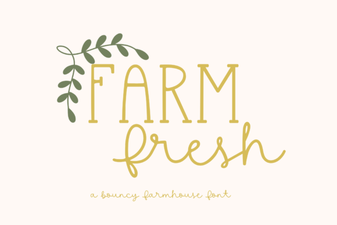 Farm Fresh Font: Rustic Design Inspiration
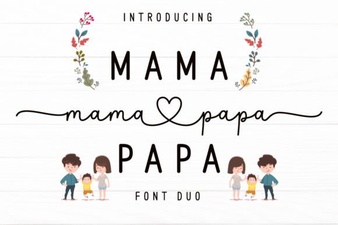 Mama Papa Duo Font: Playful & Versatile Design
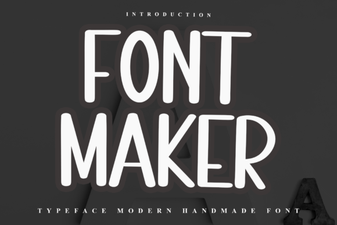 Font Maker Font: Design Your Own Creative Type
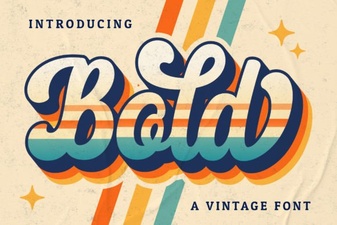 Bold Script Fonts for Creative Design Projects
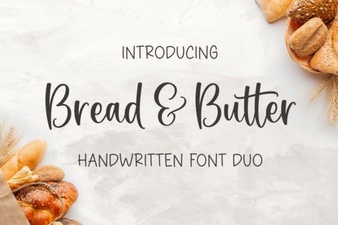 Bread and Butter Duo Font: Creative Design Pairing
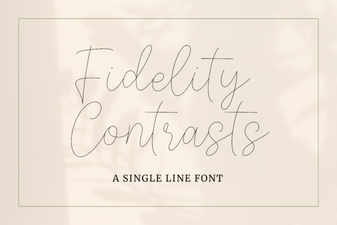 Fidelity Contrasts Font: Bold Design & Creative Use